
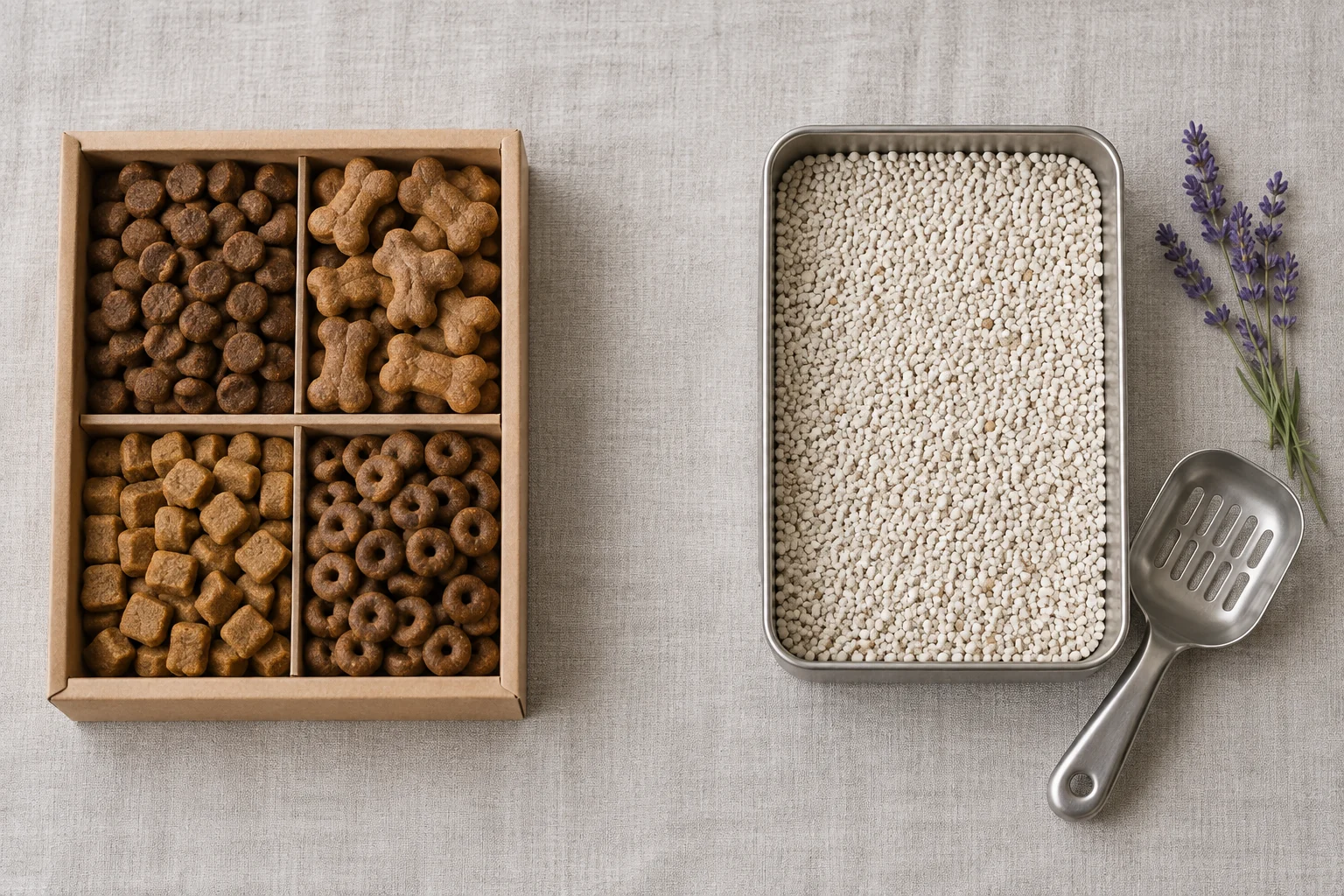
One sector, different product needs
Companies in the pet sector develop very different products. A supply discussion for a team working on a pet food formulation starts differently from one for a team developing cat litter or a care product. In your first message, therefore, clearly state the product type rather than simply saying that you make pet products.
Rasyon Kimya's portfolio presents pet and Aqua flavours separately from pet care fragrances. This distinction provides a starting point for directing your enquiry to the right group.
Flavour profiles for pet food and feed
The pet flavour list includes examples such as grilled beef, grilled chicken, tuna, liver, shrimp and salmon. These names describe the character of the flavour options. When sending your enquiry, share the type of pet food or feed you are developing alongside the profile of interest.
If you plan to make a comparison, explain which profiles you are considering and why. Maintaining the character of an existing product and developing a new option raise different discussion points. Defining your expectations provides more concrete information than correspondence based on a product name alone.
Fragrances for cat litter and cosmetic products
The pet care fragrance category covers options for cat litter and cosmetic products for cats and dogs. Aloe Vera, Cool Water, Flower Garden, Honey Milk, Powder and Vanilla are among the examples listed. Manufacturers can use these examples to describe the scent character they are seeking.
State the product's application first, followed by the target scent profile. If several products are being discussed in the same correspondence, use a separate heading for each enquiry. This helps prevent information supplied for one product from being mistakenly applied to another.
What information can you prepare as a manufacturer?
A good start does not require a complex document. Describe your product and expectations under a few clear headings. If the technical details are not yet settled, stating the current position and listing open questions provides a sufficient basis for discussion.
- The product being developed: pet food, feed, cat litter or pet cosmetics.
- The name of the flavour or fragrance of interest.
- A short description of the target taste and aroma, or scent character.
- Any existing reference and the differences you wish to assess.
- Technical questions, required quantity and company contact details.
Track separate projects through separate enquiries
If the same company develops both pet food and care products, it is helpful not to combine the two enquiries as a search for one product. Record the product type, expected profile and contact details separately for each. For example, a flavour question in a pet food project and a fragrance question in a cat litter project can be tracked under different headings. This keeps responses and assessment notes linked to the right product as the discussion progresses.
Keep your final product at the centre of the discussion
Naming the product groups correctly does not complete the entire selection process. The next step is to discuss the option of interest alongside the requirements of the product you are developing. Record the responses against the product name and clarify the scope of the previous assessment again when moving to a new application.
When contacting Rasyon Kimya, stating the product you manufacture in the first sentence is a sufficient starting point. We can then discuss your pet food flavour or pet care fragrance enquiry under the relevant heading.
Related pages
Product selection and application conditions should be clarified by considering your production process and technical needs together.
Share your technical enquiry